Showing posts with label sustainability. Show all posts

Monday, July 15, 2013

Willits, Middle Fork eel river Yolla Bolly time, and living off grid...

For the 4th of July, i decided to head up  where a good friend of mine Jeremy Byrd, resides comfortably up on a mountain just out side of Willits CA. Jeremy and i took our first year of RDNA together, and his family is about to start practicing permaculture in Ecuador.
The mountain he lives on is a part of a herbal medicine school on a property called Motherland run by a really great woman named Donna. she has a beautiful mixed veggie, flower, herbs, and perennials, and is just mostly boarded by BLM land on the other side of the mountain, and the southern most start of the Yolla Bolly wilderness is right at her back door. the valley preceding with the mountain road we drove up seemed to have a solid little community very well connected and all aiming to be very much off grid.
Jeremy's 12x12 with attached deck, sunken bath tub, outdoor shower, and outhouse.

the tiny lofted house Jeremy was staying at had a sunken-in-the-deck tub, an outdoor shower, and an enclosed outhouse. the place was pretty roomy, had a built in passive cold storage box, a pretty sweet mini fridge, a gas heater, on demand hot water, an electric cook top and big passive solar windows to keep the well built, and very well insulated little 12ftx12ftx12ft house.


his electric is entirely off of a larger off grid system, with large solar panels up on the side of the hill where the veggie garden is, feeding down to a workshop that stores the batteries and runs power down to Jermey's little 12x12. the system in the winter only has to be juiced up for a couple of hours throughout the whole winter just to restore the water based battery system that is replicated throughout the property, including the system over by the little house we stayed the night in. 

The one and only Jeremy living the days.
Running the generator is maybe a few gallons of gas, and in my opinion is a good back up and one could store a pretty sweet stash of gas for the extra kick. There is a guy down the road, Jeremy says, that runs a Takahashi shop with some pretty serious equipment entirely off his solar array system, and the rest of his homestead. the neibors dream apparently is to be able to eventually create a mini grid and run lines down the valley road and help hook into the rest of the mountain on maybe 5-10 privately owned homesteads. pretty cool. as you can see in the picture of the outside of his house, he runs in at peak winter once a month or so to town to fill the two small propane tanks you see in the background. very impressive and promising to see a simple design working so well. all of the water also comes from a well that was drilled at the TOP of the mountain.

else where on the trip we took a hot drive up through round valley and up into the eel river forks that come from the Yolla Bolly wilderness. we finally found the perfect part of the river not muddied from the freak storms we had the night before, and swam amongst salmon fingerlings very much alone, peaceful, and happy to have finally got in the water. here are some photos from that journey. 

also are the photos of the small trailer converted into tiny home with its own solar rig and the same set up as Jeremy.


Old Rail line on the eel. 

our final swim spot
our small trailer quite exposed to the wilderness and sunrise.
the attached deck and further back a covered outdoor shower, and out house.


Wednesday, August 15, 2012

Design in Time


 It can be frustrating having all the tools for design, application and execution of permaculture, along with experience of growing food and getting it to where it needs to go, and seeing the waste of our food system and our culture of consumption. It is especially frustrating when you are a dreamer and ideas man as i am... mostly unpaid, living with no car, and dreaming of a piece of land/institute/artist hermitage to cultivate and create a space that will forever teach, sustain and provide to the possible and mostly distant next of kin, friends, family, and most of all strangers.

                      DON'T STOP, LIVE GENUINELY.

Through the RDNA year, a lot moved as an artist/gardener with very little drawing/drafting experience and a whole lot of dreams and ideas. the best way i found to cull the somewhat haunting dreams and ideas that flood my mind on a constant and hourly level, was in drawing out what i saw in my mind for designs. of course this is a good idea- any designer will tell you that. but i reached a second terrible space in looking at these finished drawings- damn i like that, and i want it to happen more then ever... 

I am 28 years old. I have no medical insurance. i have not much in savings. no college degree. I am unmarried, and mostly volunteering and unemployed, socially against most of the cultural norm in this country, and don't often relate to my own generation let alone the lower or above.
 I am a statistic that, in my mind, the US and most of western civilization sees as a drain on its resources (even though in reality i use very little), especially since i am technically not contributing to the GDP- the very heart of our destructive culture that puts value on the exploitation of people, resources, and creates all living things (and often non) into statistical commodities.

thus disconnecting everything from its natural relationship to everything else. we then devalue, and then revalue into false markets and ledger sheets. this locks our self and other into the new human drama- the seperation from what Humans are inextricably a part of- Nature and its natural order.
   
"Man is born free, and everywhere he is in chains. One man thinks himself the master of others, but remains more of a slave than they are."- Jean-Jacques Rousseau, opening from The Social Contract.


 i am a lackluster citizen NOT contributing to the consortium of american consumer culture. i am a Bum, lost soul, and all at once free... sort of.


                                       AND I AM ABSOLUTELY AT PEACE WITH IT.

These two drawings reflect some of those ideals that a growing number (thankfully) of like minded people are moving towards in terms of a self reliance against a hyper-consumer based culture of individualist. we are so driven, and blinded, that we are literally  killing our selves and working even harder to try and counter the very thing that is killing us...  (albeit slowly ill admit and mostly of the usual top 10 diseases related to the very problem i am referring to). 

Between house designs under 1000 square feet, gray water systems, ponds, food forests, passive solar design to heat the buildings, animal husbandry,  medicinal botany, native plant nursery, i have come to realize i have nothing but time on my side...

although most of my plans include succession plantings of some fine plants and animals, many of these reach maturity in 20 years... meaning all the hard labor and work i must accomplish with my own two hands is ticking down a little more every day. 

BUT as i have had in twisting conversations with fellow peers about time- time is a creation of our own existence and consciousness based on our own short life spans and past history (which on the great timeline of time is very very short compared to the rest of the species on this little blue dot).

                                                                           Time. 


Time used to be based on when the sun came up, the seasons changed, the ground could be worked, and the moon was in cycle; not a 9-5 day doing something you most likely don't even love.

 i see time a little differently, finally, in terms of the emphasis we put on how much has been accomplished by a certain age or time, and the expectations that come with it.

we have a life time to do, and not a whole lot of time to spend on thinking about how. application is the best way to spend this said "time". and don't forget to put some time  aside to learn, be in wonder, and share in the curiosity that flows with us in our NATURAL lives.


Where does this leave all of this in the rambling words of this post?

It leaves the fact of the matter that time is always on our side, that accomplishment and success is based on ones own happiness and not that of the status-quo of our toxic culture. its about what YOU want to accomplish, what your dreams are, and designs for a life you are hopefully wanting to be better, and leave behind something others can forever appreciate and wonder at. expectations should be and are only rooted with the self. and DON'T PANIC. living with as little as you need can put into perspective what some of the dreams are that you may want to ultimately leave behind after the short time we all spend on this little blue planet. If you dream and design for a better future, or a future in general, then you may have accomplished more then all the nay sayers of tradition. Permaculture is, after all, about healing what neglect and abuse has been done to both the human, the earth the human relies on indefinitely, and the community in which both (should) exist.  Happy dreaming.

Thursday, June 21, 2012

Solstice at Lairds

Danny and Meghan dropping rose petals on our way down to Lairds


Solstice, the longest day of the year, first day of summer. to celebrate there was a grand thanksgiving and soup dinner held at the fabled Lairds landing hosted by Jordan Atanat and the coasties. this was what we hoped to be our first of many annual solstice/equinox/full moon celebrations at Lairds. bringing back connection to the rhythms of the universe, nature, ancestors, and our selves in this season of plenty.

Clayton's old house

 Lairds Landing was once a artist colony, complete with a few whimsical cottages, a art studio/forge and a artist named Clayton Lewis (http://www.claytonlewis.net) that would hold parties and dinners and gatherings with all the local fisherman, boat builders, artists and other eccentrics of west marin. the magic and presence of Clayton is still there, and we all held space for Clayton, and even smelled his pipe waft through the cool solstice air as we lit a fire and created an alter on the beach. 
Nature Table
 As the light held on nearly to 9:45 in the far west of the sky, phosphorescence appeared in the lapping Tomales Bay water millions of little critters shimmering in the disturbed swirling bay. Jordan splashed through with rolled pants and the water glowed and sparkled in the final moments of our solstice celebration. 

In those final minutes of light for the first day of summer and the 2012 summer solstice a few things came to mind-

What is our relationship to the sun and earth? 
the rhythms and beats of the seasons?

How can we preserve and continue that 
presence and energy at Lairds that Clayton held?

If Clayton were to be there last night, 
what would he have wanted as a Solstice Tradition?

9:40 pm on june 20th 2012. fire light solstice at Lairds Landing. thank you Clayton Lewis


Marshall Beach and hog island, 2012 summer solstice.

Thursday, June 14, 2012

Cheese?!

Last night, for the first time we made cheese. 3 gallons of goats milk.... and we still had maybe 3 gallons to use for yogurt and to have in the morning... without any enzyme starter, i just used Rennet, to separate the fats and whey. on the left is the cheese hanging to drain and cure, and the right is the whey and cheese- the cheese having formed into a semi solid. below is the cheese in the cloth ready to be wrapped up and hung. to follow will be salting, pressing to cure, and adding dried herbs to make a herb goat cheese cheve... thank you GOATS.

also started today was some kimche, and Komboocha, (or booch as we like to call it)  by the wonderful and recently arrived new farm pirate (that's our new slang for intern) Meghan. also will attempt some whey soda with all our strawberries, and dehydrate them as well. lots going on. lots to do. lots to post... 
patients... 
and a quote that has been floating around here
"the universe is not personal"

Thursday, June 7, 2012

chickens

happy old hens! speculation is they are around 8 years old.
the "bunkers" as the converted worm bins are named.


 This is the chicken coop. the whole fenced in area is very luxurious, complete with several (in my opinion) of the best apples at RDI. they have a good run, an old truck top, and even two giant worm bins that are built out of old cast iron tubs... although they cant get into the said tubs... the worm bins are cumbersome but are a great design none the less. we have the old grey water sludge that had millions of worms sitting in the worm bins as we speak- but penny and i both agree that they are almost too heavy to lift the tops and use, and we may retire them... im thinking of converting them to raised beds for carrots and beets... hmmm


our hens are down in numbers though, a bunch have been culled, mostly due to their old age, and they are laying at around 5 eggs a week if we are lucky. there is 6 hens left. hopefully we shall be getting some young guns soon!

Sunday, May 20, 2012

Aquaponics lab

The Aquaponics Lab @ RDI
This is Orin, and his final design project which was to install the next phase of the green house design- a fish farm lab that is a closed system filtered by plant beds. the water is sent to hydroponics set ups (three examples that are designed into it) that feeds the plants and sends the clean water back to the fish tank. 
all this is accomplished via Nitrite build up by fish waste- this is sent through the different runs of hydroponics and beneficial bacteria break it down into Nitrates; which are then used to feed the plants. add a little sun and you have a fully supported hyrodponic and fish aquaculture system! or: Aquaponics!
we will be raising fish and crustaceans in the tank that can be harvested for food and used entirely to their fullest on site. 

this is the finished product to the right! don't you love what i call the cooling tower? that is filled with hydroponic medium, a puffed clay pellet. the water is pumped through that tower, and plants grown vertical! the water returns to the tank via gravity and clean. 

Saturday, May 19, 2012

The Solar Showers

 In these photos there is the ultimate enclave for the bathing experience:
the Regenerative Design Institute solar showers.

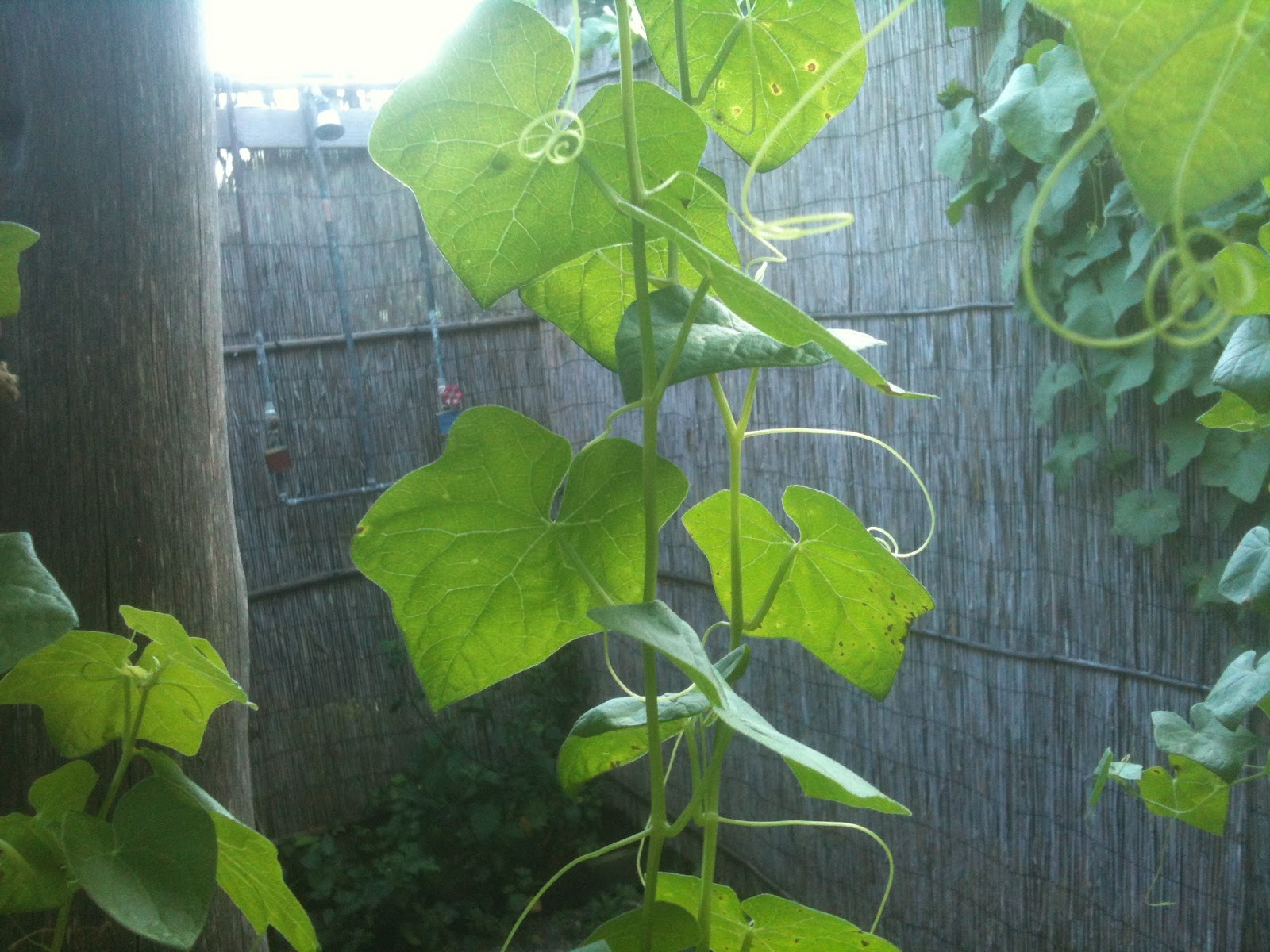
Since moving in to RDI, i have only been taking solar showers in the late afternoon in the shadow of the west ridge. luckily the past few weeks since iv been here have been beautiful, and the water is HOT. surrounding the showers are wild climbing cucumbers, and the soft gurgling and echo of the water pipe for the spring overflow rain garden, and robins in song with the jays and house finch.
 These showers use copper tubing that run through a black painted box with a glass top. the water is heated and stored in a run of the mill house hold water heater. the thermal flow of cold and hot water- cold sinks and heat rises up through the pipes as the cold water finds lower ground through the copper piping to reheat. simple, yet really wonderfully crafted.
even a partially sunny day will give you some warm water.
looking out through the reed screens you can see south down the property and a little of the coast and ocean on a real fog-less day. Bolinas and this sea shore is truly beautiful along with this sacred land that has been created here at RDI. nothing better then the water from the land that you live heated by the sun, and poured over flesh to be clean. wonderful.

Monday, September 19, 2011

permaculture Principles 101: Bill Mollison says...


As i said before, Permaculture has evolved out of the need to to keep energy flowing through, into and not out of the system at hand.
we all remember the first law of thermodynamics, yes? energy and mass can neither be created nor destroyed- it is constant.
whether it be water, sunlight, organic matter, human resources or any other number of factors, it can be overwhelming at times to try and keep track of all that energy and the different systems you have going.

this can even include, day to day things in life its self. Permaculture is not just environmental- it can be about the farm and land, but also sub-urban, urban, and the human mind- but we shall get to those wonderful "invisible structures" later on.

Bill Mollison's Permaculture principles:

Observation-
work smart not hard! observe your system well- get to know how it all functions and what exists within it- don't waste your time on labor that is redundant to the mechanics of what you already got!

Resources-
any energy storage that assists yield. the work of the Permaculture designer is to maximize useful energy storage in any system- be it the house, livelihood, urban or rural landscape.

The Problem is the Solution-
we are the problem, we are the solution. In Permaculture the focus is on turning constraints into resources. Sometimes the very problems we are trying to fix such as abundance of water flow, (or lack there of) or over abundance of manure, can be the solutions to other problems- hydropower/water mills/water storage, or poor soil.

Pollution is An Unused Resource-
if resources are added beyond the capacity of the system to productively use them, the system becomes disordered and goes into chaos. imbalances may occur as a result. ex: too much grey water or too much fertilizer can result in nutrient overload, thus nutrients can become inaccessible to plants.

System Yield-
the sum total of surplus energy produced by, stored, conserved, reused or converted by the design. energy is in surplus once the system itself has available all its needs for growth, reproduction, and maintenance.

Biological Resources-
Living things reproduce and buid up their availability over time assisted by their interaction with other compatible elements. use and preserve biological intelligence.
Ex. integrated pest management- including wild life, bees, birds, worms, bacteria, ducks, chickens, pigs, cows spiders, frogs etc. create a plan to allow them to do what they do naturally to aid in the fertility and maintenance of the land thus decreasing the human and technological work load.

Use Onsite Resources-
Determine what resources are available and what resources are entering the system on their own and maximize their use. Ex. keeping water on site and reusing as much as possible with ponds, grey water, retaining rainwater from roofs, and surface runoff. maximize the use of sun, wind, people, biological resources etc.

One Calorie in/One Calorie Out-
The sun runs all life processes. a finite amount of growth can occur in a given season. as we export trees, grass clippings, "weeds" animals (cattle and sheep for meat) we are essentially "mining" our soil of minerals. we need to grow crops to replace the minerals and nutrients exported during the harvest. keep as much biomass onsite as you can. hell, take in kitchen scraps from local businesses... after all one persons kitchen scrap is another persons biomass gold.

Law of Return-
what ever we take we must return. every object must provide for its replacement. maintaining cycles=sustainability.

Every Element Supports Many Functions-
how many functions can we get from every element we include in our plans? choose each element in a system and place it so that it performs as many functions as possible.
Ex. a pond provides cooking, supports ducks, fish and aquatic plants. thus creating a richer habitat. it also catches rainfall, gives fire protection and domestic household water. the clay dug from the pond site can be used for building structures such as buildings, walls, benches, ovens and plaster finishes.

Every Function is supported by Many Elements-
patterns here anyone??? planed redundancy will ensure that all-important functions will be met despite the failure of one or more elements. Ex. Poly-cultural crops, diverse energy sources, diverse lively hoods.

Relative Location-
recognize connections. locate elements relationally. maximize relationships among components. components placed in a system are viewed relatively, not in isolation. Ex. location of trees can provide windbreaks.

Diversity-
as sustainable system mature, they become increasingly diverse over time. the number of elements is not as important as the functional relationship between them.

Local Focus-"think globally, act locally"-
create community, share seed, save seeds, grow food, and support local economy.

Stocking-
finding the balance of various elements so that one element doesn't overpower others over time. how much of an element needs to be produced in porder to fulfill the need of the whole system? more isn't always better.

Stacking-
1. multiple functions for each element (stacking functions!)
2. vertical stacking. always look at the space as 3D. vertical space is more valuable then sq. footage. trellising, multiple canopies of functional plants.

Succession of Evolution-
recognize that certain elements prepare the way for the system to support other elements in the future. working in the dimension of time.

The Yield of a system is Theoretically unlimited-
the only limit on the number of uses of a resource possible is the limit of the information and imagination of the designer.

Work Within Nature-
aiding the natural cycles results in higher yield and less work. a little support goes a long way.

Edge-
optimize edge. edges or eco-tones are areas where two ecosystems come together to form a third which has more diversity and fertility then either of the other two. Ex. Edges of ponds, forests, meadows, etc.

Make Least Change for Greatest Possible Effect-
the less change that is created the less embedded or embodied energy is used to create the system.

Planting Strategy-
1st native plants, 2nd proven exotics, 3rd unproved exotics on small scale with lots of observation.

Small Scale Intensive Systems-
start small and create a system that is manageable and produces high yield. when you start small "mistakes" or "learning curve" has less impact on the environment.

Relinquishing Power-
the roll of a successful design is to create a self-managed system.

Everything Gardens-
all organisms manipulate their environment to their benefit.

Appropriate Technology-
what is appropriate in one context may not be so in another. Permaculture principals apply energy efficiency, cooking, lighting, transport, heating, sewage treatment, water delivery, and other energy needs.

Tuesday, August 30, 2011

in the year 2023

It seems that we think about the future at every point of our lives.

The moment we start talking about climate change, our economy, even a life crisis, we harp on the inevitable but mostly unpredicted future of tomorrow. We think about "the saving of the planet," and how we need to act now for that future, the future for a living planet, and to make sure we protect those rain forests "for our children's, children's, children's, children".

too much of this would burn me out, and growing up with a lot of it, has.
i mentioned before about not being an eco warrior, and how i might have mentioned, a little harshly, against the general liking of the environmental movement.

For the past 25 years of my life, and almost another 20 before that, we were becoming self aware of our environment and what kind of effect/affect modern, industrialized civilization, has had on both us and the planet.

in less then half a century, our planet became less a far off world, and all at once a very small home to a creature with very big aspirations (Humans).

our oceans started to feel the strain of too much harvest, forests turn to pasture::small towns::paved communities::and cities. our air quality and environmental quality
have quickly depleted. the resources that have fed all of this, are doing the same.

so we know all this. its very sad. in fact, its entirely the best of dooms day any literature, film (even radio show) has yet had to offer.

the small forces (and sometimes very large organizations) working to save it, i think, tend to go about it all wrong: we have tried to address this horrible out look on the future with an approach, business like, on all its levels. we have tried to use the same method of organization and capital that has caused the exact dooms day scenario we are looking at.

when we try and predict and draw an outline to this dooms day-
10 years 5 degrees warmer? 20 years there is not enough food? peak oil now, or in 50 years?

we forget about the exact meaning of "now." the most important part of all this, is living in the now, and starting on a path to living as a being. as being one. as being self reliable. as being part of other beings. community, human power, and the ability to come together and figure it out piece by piece.

build water tanks to collect water.
grow food in any space possible.
share a car, tools, stories, skills, even a fork and knife.
DIY: classes, books, and volunteering.
build a chicken coop and rescue birds from industries.
forage for food, and etc.

so live now. by approaching everything you need as being, you can tackle even the biggest problems you think is entirely out of your control.

think of the roots, and imagine the branches in which they lead-
everything starts with you.
you are the sole consumer/creator of [your] life.
the greatest resource we have of all: our bodies, our minds, and most of all our hands.
everything after that does not matter, because it all comes back to us. we.

if its change we need and want, then the roots will have to be unbound and allowed to grow into the proper space. without the room to grow and change, we will wither away within our own soil, with no room to be human. it seems to me we need a good transplant, and something better then a concrete pot....

Bolinas and the PDC


As of Friday, i will be up in Bolinas CA for a two week permaculture intensive, to be certified as a permaculturalist.

what is permaculture?

In the mid 1970's Bill Mollison and David Holmgren, in response to the horrid destruction of top soil due to industrialized agriculture and the poisoning of biodiversity, water and land in Australia-
had coined from earlier definitions of permanent agriculture or forest culture at the turn of the 1900s, "permanent culture" or permaculture, defining both land and people in the practice of a more permanent sustainability of resources and biome.

at right, ( a quick and poor drawing)is just a quick visual of the 3 key principals of permaculture:

earth care-
this is recognizing that earth is first. we are a part of it, not apart from it, and it takes input of energy just as much as we take from it.. in fact we should be putting more energy back into it.

people care-
we live with each other, so that we live within our means and the earth's means. we prioritize earth care so that it becomes own by default. care of our environment for us, not for the sake of saving the earth; we seem to forget that this planet lived on quite nicely without us for millennia.
we are only destroying it for our selves, and no one else. that is a BIG DEAL PEOPLE! (i do not consider my self some eco warrior- go hug a tree, i couldn't care less- people need to realize that there will be plenty of life long after we go extinct... it is entirely in our control whether we live on and have a human friendly planet. remember the T-rex and friends lived in a much hotter, more CO2 rich atmosphere/planet then we did- they went extinct because that atmosphere lost its heat that sustained their cold blooded life style, and it happened over millions of years. im sure if they could have helped it, they would have. this is just one example of a cycle that our planet naturally is a part of, and we have altered our environment on every level since our brains have allowed us to. why our smart and very self conscience brains have not recognized the inevitable finite nature of resources is going to be the punch line of our tool using, and amazing evolution.)

fair share-
by recognizing the limits of resources and consumption, and maximizing their outputs, we can put more back into those resources and energies then we take out of both the earth and for our selves.

these three principles are key, all cycling back into one another, and creating a balance and organization that allows the abundance that is needed for all three- earth, human, and fair share.
if we do not share or work together within this cycle, then we create a isolated, closed system.
imagine a fish tank: we want to keep water and oxygen flowing through the filter and pump, populate it with some plants, invertebrates, and add only a few larger fish that can add to that cycle. every once and a while we must tend to it, clean it, and make sure everything has what it needs and is kept in balance.

permaculture is our solution to our own fish tank (earth) and if we don't start treating it as such, we will all be floating belly up like that gold fish we once had long and ago. might as well flush us down the toilet....