Showing posts with label permaculture principles. Show all posts

Wednesday, August 15, 2012

Design in Time


 It can be frustrating having all the tools for design, application and execution of permaculture, along with experience of growing food and getting it to where it needs to go, and seeing the waste of our food system and our culture of consumption. It is especially frustrating when you are a dreamer and ideas man as i am... mostly unpaid, living with no car, and dreaming of a piece of land/institute/artist hermitage to cultivate and create a space that will forever teach, sustain and provide to the possible and mostly distant next of kin, friends, family, and most of all strangers.

                      DON'T STOP, LIVE GENUINELY.

Through the RDNA year, a lot moved as an artist/gardener with very little drawing/drafting experience and a whole lot of dreams and ideas. the best way i found to cull the somewhat haunting dreams and ideas that flood my mind on a constant and hourly level, was in drawing out what i saw in my mind for designs. of course this is a good idea- any designer will tell you that. but i reached a second terrible space in looking at these finished drawings- damn i like that, and i want it to happen more then ever... 

I am 28 years old. I have no medical insurance. i have not much in savings. no college degree. I am unmarried, and mostly volunteering and unemployed, socially against most of the cultural norm in this country, and don't often relate to my own generation let alone the lower or above.
 I am a statistic that, in my mind, the US and most of western civilization sees as a drain on its resources (even though in reality i use very little), especially since i am technically not contributing to the GDP- the very heart of our destructive culture that puts value on the exploitation of people, resources, and creates all living things (and often non) into statistical commodities.

thus disconnecting everything from its natural relationship to everything else. we then devalue, and then revalue into false markets and ledger sheets. this locks our self and other into the new human drama- the seperation from what Humans are inextricably a part of- Nature and its natural order.
   
"Man is born free, and everywhere he is in chains. One man thinks himself the master of others, but remains more of a slave than they are."- Jean-Jacques Rousseau, opening from The Social Contract.


 i am a lackluster citizen NOT contributing to the consortium of american consumer culture. i am a Bum, lost soul, and all at once free... sort of.


                                       AND I AM ABSOLUTELY AT PEACE WITH IT.

These two drawings reflect some of those ideals that a growing number (thankfully) of like minded people are moving towards in terms of a self reliance against a hyper-consumer based culture of individualist. we are so driven, and blinded, that we are literally  killing our selves and working even harder to try and counter the very thing that is killing us...  (albeit slowly ill admit and mostly of the usual top 10 diseases related to the very problem i am referring to). 

Between house designs under 1000 square feet, gray water systems, ponds, food forests, passive solar design to heat the buildings, animal husbandry,  medicinal botany, native plant nursery, i have come to realize i have nothing but time on my side...

although most of my plans include succession plantings of some fine plants and animals, many of these reach maturity in 20 years... meaning all the hard labor and work i must accomplish with my own two hands is ticking down a little more every day. 

BUT as i have had in twisting conversations with fellow peers about time- time is a creation of our own existence and consciousness based on our own short life spans and past history (which on the great timeline of time is very very short compared to the rest of the species on this little blue dot).

                                                                           Time. 


Time used to be based on when the sun came up, the seasons changed, the ground could be worked, and the moon was in cycle; not a 9-5 day doing something you most likely don't even love.

 i see time a little differently, finally, in terms of the emphasis we put on how much has been accomplished by a certain age or time, and the expectations that come with it.

we have a life time to do, and not a whole lot of time to spend on thinking about how. application is the best way to spend this said "time". and don't forget to put some time  aside to learn, be in wonder, and share in the curiosity that flows with us in our NATURAL lives.


Where does this leave all of this in the rambling words of this post?

It leaves the fact of the matter that time is always on our side, that accomplishment and success is based on ones own happiness and not that of the status-quo of our toxic culture. its about what YOU want to accomplish, what your dreams are, and designs for a life you are hopefully wanting to be better, and leave behind something others can forever appreciate and wonder at. expectations should be and are only rooted with the self. and DON'T PANIC. living with as little as you need can put into perspective what some of the dreams are that you may want to ultimately leave behind after the short time we all spend on this little blue planet. If you dream and design for a better future, or a future in general, then you may have accomplished more then all the nay sayers of tradition. Permaculture is, after all, about healing what neglect and abuse has been done to both the human, the earth the human relies on indefinitely, and the community in which both (should) exist.  Happy dreaming.

Saturday, May 19, 2012

The Solar Showers

 In these photos there is the ultimate enclave for the bathing experience:
the Regenerative Design Institute solar showers.

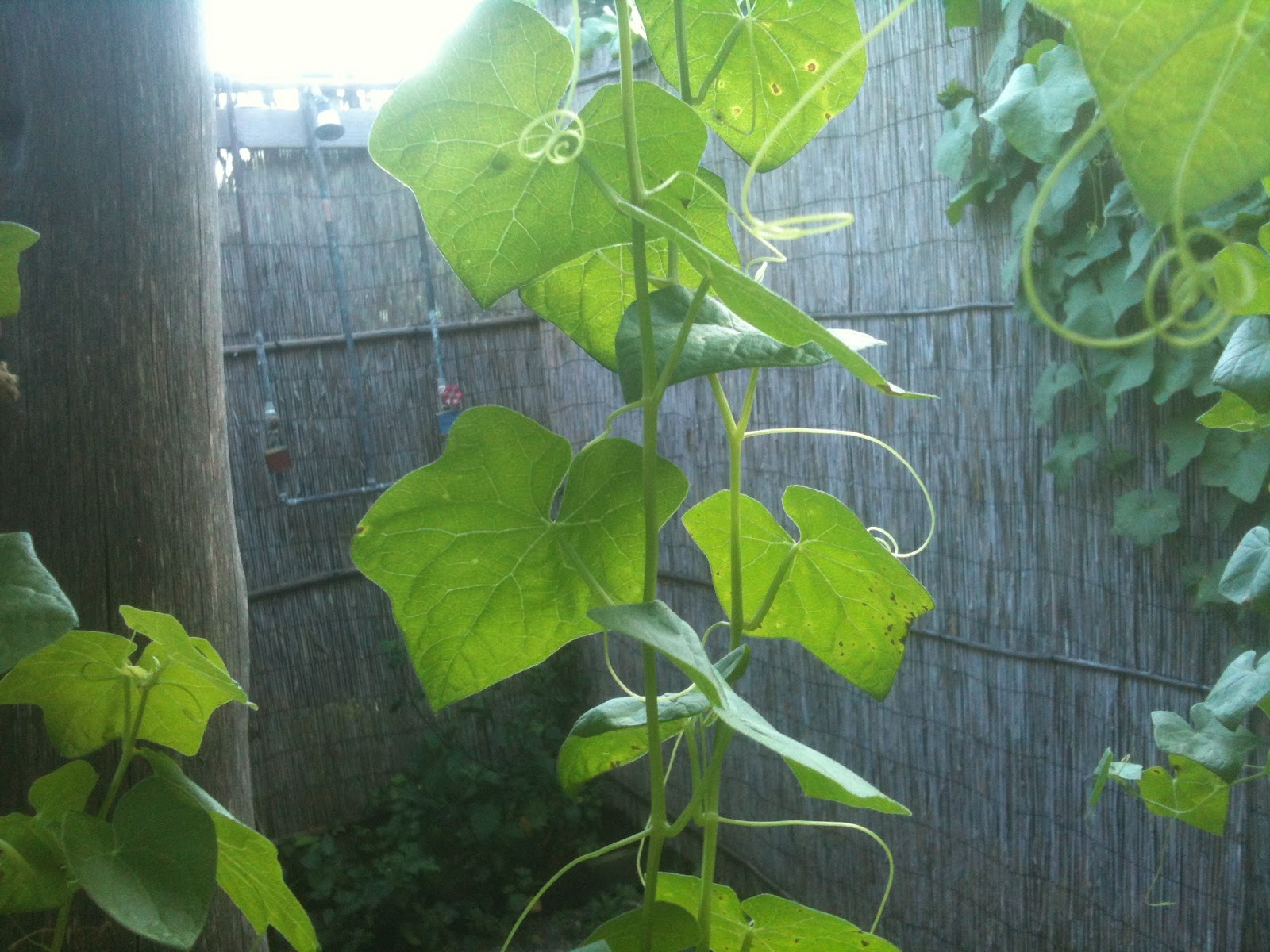
Since moving in to RDI, i have only been taking solar showers in the late afternoon in the shadow of the west ridge. luckily the past few weeks since iv been here have been beautiful, and the water is HOT. surrounding the showers are wild climbing cucumbers, and the soft gurgling and echo of the water pipe for the spring overflow rain garden, and robins in song with the jays and house finch.
 These showers use copper tubing that run through a black painted box with a glass top. the water is heated and stored in a run of the mill house hold water heater. the thermal flow of cold and hot water- cold sinks and heat rises up through the pipes as the cold water finds lower ground through the copper piping to reheat. simple, yet really wonderfully crafted.
even a partially sunny day will give you some warm water.
looking out through the reed screens you can see south down the property and a little of the coast and ocean on a real fog-less day. Bolinas and this sea shore is truly beautiful along with this sacred land that has been created here at RDI. nothing better then the water from the land that you live heated by the sun, and poured over flesh to be clean. wonderful.

Saturday, March 24, 2012

Swedish Candle!

To our right-
The amazing center burning upturned log... no fire pit? no need... this is called a Swedish Candle; by cutting a X down the center of the log, you can start a small twiggy fire at the apex of the X, and it will burn down as far as you made the cut, and put its self out.


Below-
not the most prime example of chainsaw safety protocol, but at least he is wearing glasses right? cut the log, start a small fire, and you have a wonderful instant outdoor fire! you could even bury the log slightly in a pit, combine a few others cut the same, and make a larger or smaller candle!

when we lit it, it was a really nice self controled little fire, and if you cut an X on both bottom and top its a super efficient way to have a small and safe fire, and be efficient with the wood you have.

the X cut in the log allows air to flow through and heat the fire from below with updraft, and when it hits bottom, it smolders out. really cleaver fire making.

i wonder how many other ways you could cut a log, make art, or use this process of burning?

Monday, September 19, 2011

permaculture Principles 101: Bill Mollison says...


As i said before, Permaculture has evolved out of the need to to keep energy flowing through, into and not out of the system at hand.
we all remember the first law of thermodynamics, yes? energy and mass can neither be created nor destroyed- it is constant.
whether it be water, sunlight, organic matter, human resources or any other number of factors, it can be overwhelming at times to try and keep track of all that energy and the different systems you have going.

this can even include, day to day things in life its self. Permaculture is not just environmental- it can be about the farm and land, but also sub-urban, urban, and the human mind- but we shall get to those wonderful "invisible structures" later on.

Bill Mollison's Permaculture principles:

Observation-
work smart not hard! observe your system well- get to know how it all functions and what exists within it- don't waste your time on labor that is redundant to the mechanics of what you already got!

Resources-
any energy storage that assists yield. the work of the Permaculture designer is to maximize useful energy storage in any system- be it the house, livelihood, urban or rural landscape.

The Problem is the Solution-
we are the problem, we are the solution. In Permaculture the focus is on turning constraints into resources. Sometimes the very problems we are trying to fix such as abundance of water flow, (or lack there of) or over abundance of manure, can be the solutions to other problems- hydropower/water mills/water storage, or poor soil.

Pollution is An Unused Resource-
if resources are added beyond the capacity of the system to productively use them, the system becomes disordered and goes into chaos. imbalances may occur as a result. ex: too much grey water or too much fertilizer can result in nutrient overload, thus nutrients can become inaccessible to plants.

System Yield-
the sum total of surplus energy produced by, stored, conserved, reused or converted by the design. energy is in surplus once the system itself has available all its needs for growth, reproduction, and maintenance.

Biological Resources-
Living things reproduce and buid up their availability over time assisted by their interaction with other compatible elements. use and preserve biological intelligence.
Ex. integrated pest management- including wild life, bees, birds, worms, bacteria, ducks, chickens, pigs, cows spiders, frogs etc. create a plan to allow them to do what they do naturally to aid in the fertility and maintenance of the land thus decreasing the human and technological work load.

Use Onsite Resources-
Determine what resources are available and what resources are entering the system on their own and maximize their use. Ex. keeping water on site and reusing as much as possible with ponds, grey water, retaining rainwater from roofs, and surface runoff. maximize the use of sun, wind, people, biological resources etc.

One Calorie in/One Calorie Out-
The sun runs all life processes. a finite amount of growth can occur in a given season. as we export trees, grass clippings, "weeds" animals (cattle and sheep for meat) we are essentially "mining" our soil of minerals. we need to grow crops to replace the minerals and nutrients exported during the harvest. keep as much biomass onsite as you can. hell, take in kitchen scraps from local businesses... after all one persons kitchen scrap is another persons biomass gold.

Law of Return-
what ever we take we must return. every object must provide for its replacement. maintaining cycles=sustainability.

Every Element Supports Many Functions-
how many functions can we get from every element we include in our plans? choose each element in a system and place it so that it performs as many functions as possible.
Ex. a pond provides cooking, supports ducks, fish and aquatic plants. thus creating a richer habitat. it also catches rainfall, gives fire protection and domestic household water. the clay dug from the pond site can be used for building structures such as buildings, walls, benches, ovens and plaster finishes.

Every Function is supported by Many Elements-
patterns here anyone??? planed redundancy will ensure that all-important functions will be met despite the failure of one or more elements. Ex. Poly-cultural crops, diverse energy sources, diverse lively hoods.

Relative Location-
recognize connections. locate elements relationally. maximize relationships among components. components placed in a system are viewed relatively, not in isolation. Ex. location of trees can provide windbreaks.

Diversity-
as sustainable system mature, they become increasingly diverse over time. the number of elements is not as important as the functional relationship between them.

Local Focus-"think globally, act locally"-
create community, share seed, save seeds, grow food, and support local economy.

Stocking-
finding the balance of various elements so that one element doesn't overpower others over time. how much of an element needs to be produced in porder to fulfill the need of the whole system? more isn't always better.

Stacking-
1. multiple functions for each element (stacking functions!)
2. vertical stacking. always look at the space as 3D. vertical space is more valuable then sq. footage. trellising, multiple canopies of functional plants.

Succession of Evolution-
recognize that certain elements prepare the way for the system to support other elements in the future. working in the dimension of time.

The Yield of a system is Theoretically unlimited-
the only limit on the number of uses of a resource possible is the limit of the information and imagination of the designer.

Work Within Nature-
aiding the natural cycles results in higher yield and less work. a little support goes a long way.

Edge-
optimize edge. edges or eco-tones are areas where two ecosystems come together to form a third which has more diversity and fertility then either of the other two. Ex. Edges of ponds, forests, meadows, etc.

Make Least Change for Greatest Possible Effect-
the less change that is created the less embedded or embodied energy is used to create the system.

Planting Strategy-
1st native plants, 2nd proven exotics, 3rd unproved exotics on small scale with lots of observation.

Small Scale Intensive Systems-
start small and create a system that is manageable and produces high yield. when you start small "mistakes" or "learning curve" has less impact on the environment.

Relinquishing Power-
the roll of a successful design is to create a self-managed system.

Everything Gardens-
all organisms manipulate their environment to their benefit.

Appropriate Technology-
what is appropriate in one context may not be so in another. Permaculture principals apply energy efficiency, cooking, lighting, transport, heating, sewage treatment, water delivery, and other energy needs.